Flame of Valhalla Global
- 4.6
- Rating
- 1.00M
- Installs
- Free
- Price

 Analysis by App-foxy
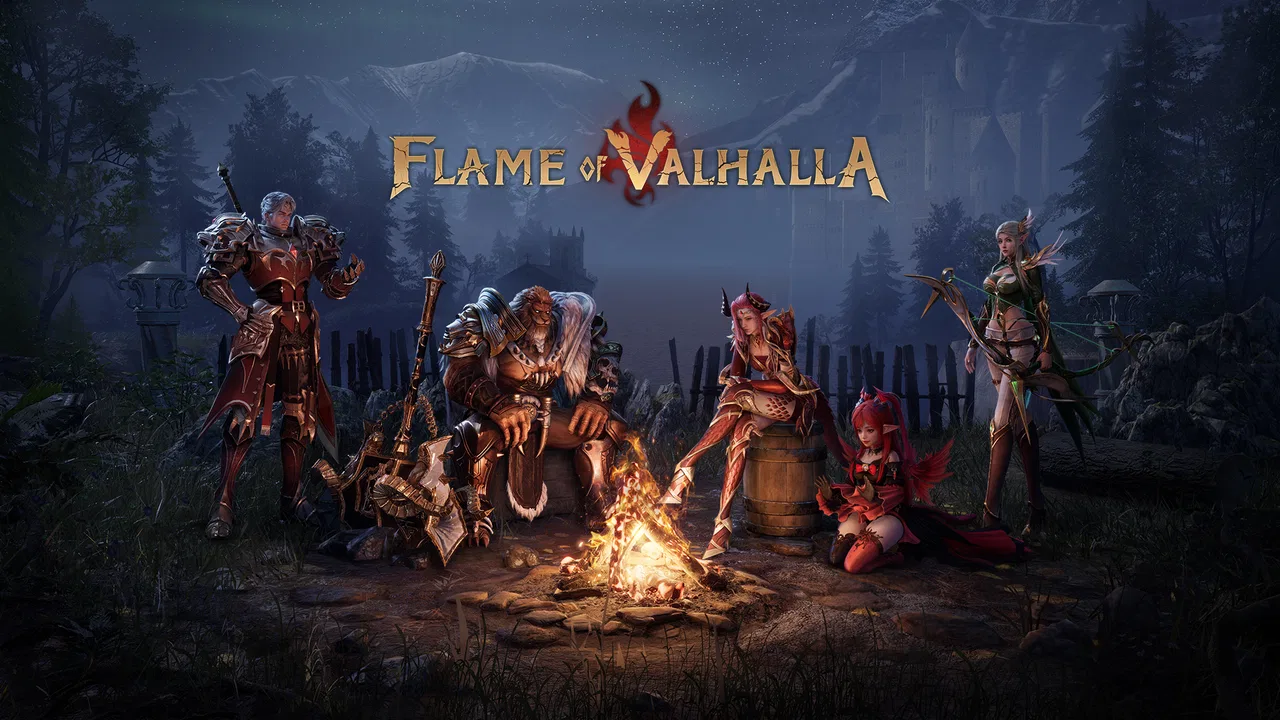
I spent time with Flame of Valhalla Global as a mobile role-playing game, and my first impression was clear: this is built for players who want a Nordic-flavored fantasy world that feels active rather than purely menu-driven. It presents itself as a large online adventure, with exploration, character growth, and the social energy that comes with an MMO. That combination makes it easy to sample, but it also means the game asks for more patience than a short, self-contained RPG.
The game is free to download, carries an Everyone 10+ age rating, and comes from Leniu Technology Co., Limited. Its current version is 3.6, and it runs on devices using Android 6.0 or later. Those details matter because this is the sort of title people often install casually, then keep only if the opening hours offer enough direction and variety. In my experience, the appeal depends less on wanting a traditional story RPG and more on whether you enjoy steadily developing an online character.
What the Nordic setting feels like in everyday play
The strongest part of the presentation is its choice of theme. Nordic fantasy gives the game a recognizable identity through the language of fire, gods, warriors, and Valhalla, rather than leaving it as another anonymous medieval world. I found that useful when deciding what to do next: the setting creates a simple expectation of heroic progression, dangerous encounters, and a world designed to feel larger than the immediate quest.
You May Also Like

 Blood Strike: 2.5 Anniversary
Blood Strike’s Loadouts Turn Every Drop Into a Tactical Gamble
A close look at Blood Strike’s custom loadouts: how fast access to signature weapons reshapes its battle royale rhythm, rewards preparation, and narrows the gap between fights.

 Pandora - Music & Podcasts
Pandora’s Music Is Easy to Start, but Harder to Recover
Pandora’s strength is its low-effort path from a seed to a station. Its weak spot is how much confidence it asks you to place in connection, setup, and quiet recovery.

 8 Ball Pool
 Is Built on Rivalries, Rematches, and Routine
A close look at the rivalries, rematches, shared routines, and unanswered safety questions that turn a quick pool match into a persistent mobile community.

 Samsung Music
’s Quiet Strength Is Playing What You Already Own
Its reach comes less from spectacle than from dependable access to a personal library. That simplicity is both the app’s strongest retention engine and its ceiling.

 AccuWeather: Weather Radar
AccuWeather Review: A Quick, Clear Forecast for Everyday Decisions
For everyday plans, the best forecast is the one you can understand quickly. AccuWeather makes rain timing, radar, and local conditions easy to act on, with a few trade-offs.

 Hill Climb Racing
Why Hill Climb Racing Still Turns Crashes Into One More Run
A tiny car, a bumpy hill and one more upgrade: Hill Climb Racing keeps resurfacing because its simple chaos makes every near-miss feel personal.
More From Our News Desk



That does not mean every moment feels equally adventurous. Like many mobile MMORPGs, the experience is likely to alternate between active play and periods where the game guides you toward the next objective. I appreciated that structure when I had only a short break, because I could make progress without planning a long session. On the other hand, players who want constant manual control may find the guided rhythm less satisfying than a console-style role-playing game.
A realistic use case is a commute or an evening when you have twenty minutes to spare. You can open the game, follow the current objective, improve your character, and leave without needing to remember a complicated chain of tasks. For longer sessions, the question becomes whether the world itself keeps you interested after the initial novelty of the Nordic theme fades. That is where your preference matters: this is more suitable for routine progression than for a tightly authored adventure that ends after a few focused chapters.
I would also recommend adjusting expectations around the word “open world.” In a mobile MMO, a broad world usually means several areas, activities, and routes connected through online progression; it does not automatically promise the same freedom or environmental detail as a premium single-player RPG. The attraction here is the sense of belonging to a continuing game world, not simply walking through a beautiful landscape with no interruptions.
Progression is the main reason to return
The core loop is easy to understand: play through the fantasy adventure, strengthen your character, and return for another round of improvement. That loop can be comforting. I often prefer a game that makes the next useful action obvious, especially on a phone, and this title is aimed at that kind of momentum. You do not need to invent your own goals from the beginning; the game gives you a direction and lets you build from there.
The trade-off is that routine can become visible quickly. If your favorite RPG moments come from solving difficult encounters with a carefully chosen build, you may want to examine how much direct decision-making the game gives you before committing to it. If you instead enjoy collecting progress, checking upgrades, and watching a character become more capable, the structure is more welcoming.
One practical tip is to avoid treating every available improvement as equally urgent. In a progression-heavy game, menus can make several upgrades look important at once. I found it more sensible to identify the activity I actually wanted to play, then spend time improving the parts of the character that supported that goal. This prevents the common mobile-game problem of scattering attention across too many small boosts and then feeling that nothing has changed.
Another useful habit is to play in short tests before deciding whether the long-term loop suits you. The free entry price removes the need to make an immediate financial commitment, but it does not remove the time commitment. A game can be inexpensive to install and still be a poor fit if its repeated tasks feel like work to you. I would give it several ordinary sessions rather than judging it solely by the first dramatic encounter or the first attractive reward.
Spending deserves a careful look
The purchase model is straightforward in one important respect: the game is free to start, while optional in-app items range from $0.49 to $99.99 per item. That is a very wide span, so I would not approach the shop casually. A small purchase may feel harmless, but the presence of much larger individual items means it is worth deciding on a personal limit before browsing offers.
I did not see enough confirmed information to describe every item as cosmetic, convenience-based, or power-related, so I would not promise that spending is limited to appearance. That distinction is essential for a role-playing MMO. If purchases affect progress or combat strength, a player who spends regularly may move through the game differently from someone who remains free-to-play. If they are mainly optional extras, the pressure is lower. The responsible approach is to inspect each offer in context instead of assuming the shop is harmless or automatically unfair.
My advice is to treat the free version as the real test. Play without buying anything, watch how comfortable the progression feels, and only then decide whether an item genuinely improves your experience. Do not purchase simply because a limited skin or a timed offer creates urgency. The store summary specifically promotes a limited-skin claim, which makes it especially important to separate “I like this appearance” from “I feel pushed to act now.”
Families should also remember that a free download can still expose a player to paid choices. The Everyone 10+ rating describes the intended age range, but it does not replace household rules about spending. On a shared device, I would use the platform’s purchase protections and make sure younger players understand that the game can present items at very different prices.
Is the competition fair for non-spenders?
This is the area where I would be most cautious. An online role-playing game can feel fair when paid items are visual or convenient, but the balance changes if purchases improve combat performance, speed up advancement, or provide access to advantages that matter in competition. Because the confirmed purchase information gives the price range but does not establish the gameplay effect of each item, I cannot honestly label the competitive environment fully fair or pay-to-win.
That uncertainty does not make the game unusable. It changes how I would play it. If you mainly want the world, quests, character development, and social atmosphere, you may be perfectly happy treating competitive rankings as something optional. If your main goal is to compete seriously against other players, I would first observe how progression works for players who do not spend and whether victories appear to depend on skill, time, equipment, or purchases.
A sensible workflow is to delay competitive spending until you understand the game’s economy. Learn which activities provide meaningful progress, identify what your character actually needs, and compare the value of an item with the amount of play it replaces. This is more useful than buying early because a shop banner suggests that an offer is essential. It also gives you a clearer idea of whether the game rewards planning or simply rewards a larger budget.
Compared with a conventional single-player RPG, the fairness question is more complicated here because the online environment can place your progress beside someone else’s. A premium offline game generally asks for one purchase and then measures you through its designed challenges. A free MMO can be easier to enter but may require more attention to optional spending. That is the central trade-off I see with this title.
Who will enjoy it, and who should skip it?
I would recommend Flame of Valhalla Global to someone who likes fantasy MMOs, wants a Nordic-inspired setting, and enjoys a character that keeps developing over repeated sessions. It is also a reasonable choice for a player who prefers guided goals to a blank map. The free starting point makes it easy to find out whether the atmosphere and progression are appealing before spending money.
I would be less enthusiastic for someone seeking a carefully paced, offline story with no shop decisions. That player may be better served by a premium role-playing game designed around a fixed campaign. I would also hesitate to recommend it to anyone who dislikes recurring progression, online distractions, or the possibility that other players may advance faster through spending or heavier time investment.
Players with older Android phones should pay attention to the minimum operating-system requirement of Android 6.0. Meeting that requirement does not guarantee an equally smooth experience on every device, so I would keep expectations practical on older hardware. A larger screen can also make a difference because online RPG interfaces often ask you to move between combat, character development, and reward screens.
The game has attracted a substantial audience, with more than a million installs, an average rating of 4.6 from roughly eighty-nine thousand ratings, and about eleven thousand written reviews. Those figures suggest that the concept has found a real audience, but they should be read as a starting signal rather than proof that it matches your preferences. A popular mobile MMO can still feel repetitive to someone who wants a compact adventure.
Questions I would ask before installing
The first question is whether it is genuinely free to try. Yes: the game itself is free, so you can evaluate the opening experience without paying for access. I would still review the purchase prompts carefully, because optional items range from very small amounts to $99.99 for a single item. The free entry point is useful, but it does not mean the full progression experience is free from spending pressure.
The second question is whether a non-spender can enjoy it. My answer is qualified. You can approach it as a free player and judge the world, activities, and character growth on their own merits. However, I would not assume that every competitive situation has identical conditions for spenders and non-spenders. If competitive equality is your top priority, observe the economy before investing serious time.
The third question is whether it is suitable for younger players. Its Everyone 10+ rating makes it intended for that broad age group, but the online and purchase aspects still deserve adult supervision. I would set a clear rule about buying items, especially because the largest individual purchase is much more significant than a casual low-cost add-on.
The fourth question is whether it replaces a traditional RPG. For me, no. It offers a different kind of satisfaction: ongoing online progression, a persistent fantasy identity, and the possibility of returning whenever I want another round of advancement. If I wanted a finished story with carefully controlled pacing, I would choose a different type of game rather than expecting this MMO to behave like one.
The final question is whether the limited-skin promotion should influence the decision to install. It may be a nice welcome incentive if you already like the game’s style, but I would not let a limited reward decide whether the underlying loop is right for you. First judge the controls, pacing, and comfort of progression; a temporary cosmetic attraction should come second.
My trust verdict after weighing the trade-offs
What I like about Flame of Valhalla Global is the clear identity. It is not trying to hide behind a vague fantasy label: the Nordic direction gives the adventure a recognizable mood, while the MMO format gives players a reason to return beyond finishing one quest. The free download, broad device support beginning with Android 6.0, and strong store reception make it an easy game to test.
What keeps me from recommending it without reservations is the spending uncertainty. The purchase range is confirmed, but the role of every paid item in progression and competition is not something I would infer. That means I would play thoughtfully, set a budget of zero at first, and decide only after seeing whether the game remains enjoyable without purchases. The safest way to approach this MMO is to test its progression before testing its shop.
My final view is positive but measured. If you want a free Nordic fantasy online RPG that can fill short sessions and grow into a longer hobby, this is worth trying. If you want a one-time purchase, a tightly authored campaign, or guaranteed competitive equality without needing to study the economy, I would look elsewhere. For me, its value rests on whether the atmosphere and steady character development are enough to outweigh the repetition and the need to stay alert around optional spending.
That balance is why I would recommend installing it with realistic expectations rather than treating it as an automatic must-play. Give the world a fair chance, keep purchases deliberate, and decide based on the parts you actually enjoy: exploration, progression, or online role-playing. If those elements click, Flame of Valhalla Global can become a comfortable recurring game. If they do not, its attractive theme alone will not carry the experience for long.
FAQs for Flame of Valhalla Global
01What is Flame of Valhalla Global about?
Flame of Valhalla Global is a fantasy MMORPG focused on Norse-inspired adventures, character progression, combat, and large-scale online activities. Players typically explore a broad world, complete quests, fight monsters and bosses, collect equipment, and develop their heroes through upgrades. The game is designed for users who enjoy an always-online role-playing experience with automated and active gameplay elements.
02Is Flame of Valhalla Global free to download and play?
The game can generally be downloaded and started for free, but it may include optional in-app purchases. These purchases can provide premium currency, cosmetic items, upgrade materials, equipment, convenience features, or time-saving benefits. You can make progress without paying, although some players may feel that spending helps accelerate development. Check the store listing and payment settings before downloading, especially if children use the device.
03Does Flame of Valhalla Global require an internet connection?
Yes, Flame of Valhalla Global is primarily an online game and requires a stable internet connection for most or all of its features. An online connection is needed to access servers, synchronize progress, participate in multiplayer content, receive events, and use social or competitive systems. Playing over mobile data may consume a noticeable amount of bandwidth, so Wi-Fi is recommended for longer sessions and updates.
04What devices are compatible with Flame of Valhalla Global?
Compatibility depends on the operating system, device model, available storage, and the minimum requirements specified on the official Google Play or Apple App Store page. Because the game includes 3D graphics, online systems, and frequent content updates, older phones may experience slower loading, reduced frame rates, overheating, or crashes. Before installing, make sure your device has sufficient free space and that its operating system is supported.
05Is Flame of Valhalla Global suitable for casual players?
It can suit casual players, particularly because MMORPGs of this type often provide automated questing, combat assistance, daily rewards, and progression systems that continue with relatively limited active input. However, the game may also contain numerous currencies, upgrades, events, guild activities, and competitive modes that require regular attention. Casual users can enjoy the adventure, but consistent participation may be needed to remain competitive with highly active players.
Pros
- Fast-paced combat keeps battles engaging and rarely feels slow.
- Large character roster offers plenty of team-building combinations.
- Guild features add useful social goals and cooperative activities.
- Auto-battle helps progress when you have limited time to play.
- Stylish Nordic-inspired visuals give the game a distinctive atmosphere.
Cons
- Progress can become heavily dependent on upgrading several systems.
- Duplicate characters and materials may take time to collect.
- Some menus and mechanics can feel overwhelming for new players.
- Limited-time events may pressure players to log in frequently.
- Performance may vary on older phones during crowded battle scenes.

Flame of Valhalla Global
Gallery